A Deep Bowl or a Shallow Dish for the Same Meal?
Arita porcelain bowl or dish? Match depth, rim and footprint to the food, serving style and table space, and choose a vessel that works beyond the set.
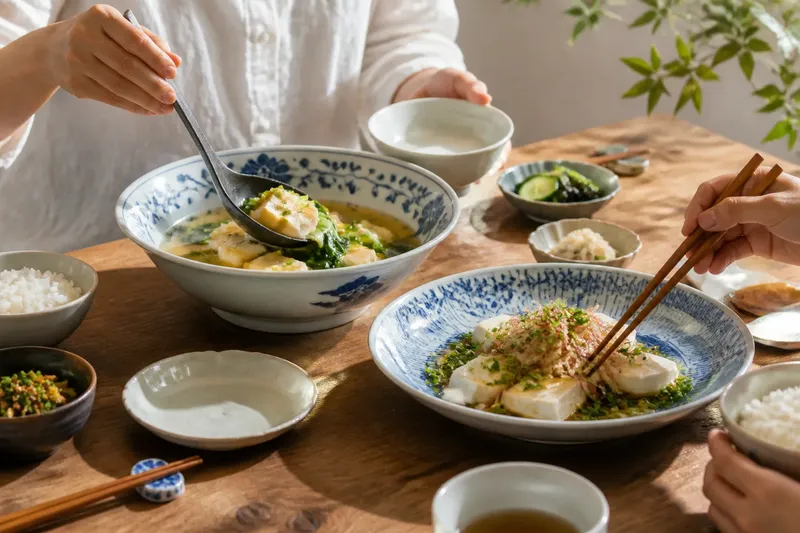
For a meal of saucy vegetables, a deep Arita porcelain bowl is usually easier to serve from; for sliced fish or crisp tempura, a shallow dish gives each piece room. The right choice depends less on matching a set than on how the food moves from serving spoon to plate, and how much room the vessel occupies once it reaches the table.
What does a deep bowl do better?
A deep bowl contains liquid, loose ingredients and food that shifts when carried. Its sides help keep broth with noodles, dressing with greens, or simmered vegetables with their cooking liquid. A curved interior also lets a serving spoon gather portions without nudging food over the rim.
Depth is useful at the table, too. A bowl can hold a dish in a compact footprint, leaving room around it for rice bowls, chopsticks and smaller plates. That can matter on a crowded table, though a very deep vessel may hide the arrangement of ingredients or make shared food harder to reach from the side.
Think about access as well as capacity. A wide, gently sloping bowl is easy to serve from, while steep sides can make the last pieces awkward to lift. For a shared dish, a broad opening often matters more than extra depth.
When is a shallow dish the better choice?
A shallow dish suits food that benefits from being spread out: grilled fish, pickles, dumplings, sliced fruit or fried pieces that should not sit in a heap. The lower sides make the contents visible and easy to reach. They also let sauces or garnishes appear as part of the presentation rather than disappearing below the rim.
Shallow forms can be deceptively spacious, but they take up more table area when their diameter is broad. Their low sides offer little help with liquid or with food that slides, so a glossy sauce, loose salad or generous serving of broth may be better contained in a bowl. Consider the journey to the table, too: a dish piled high can feel less secure to carry than one with enclosing sides.
For individual portions, a shallow dish can make sense when diners need to pick up pieces easily. For a shared portion, check that the rim leaves enough room for serving utensils without forcing them against neighbouring vessels.
How do rim and footprint change the choice?
Depth is only part of the shape. The rim sets the usable opening; the footprint determines how much table space the vessel claims. A broad, flat rim may support a tidy presentation but occupy more room than the food itself. A narrow rim keeps the outline compact, though it may leave less space for a spoon to enter comfortably.
Look at the base as well as the top. A vessel that flares widely at the mouth can be stable on a modest base, but it may overlap the space needed for another dish. A straighter-sided bowl can fit neatly beside other tableware, while its narrower opening may make serving less convenient. The best shape balances access with the clearance available around it.
- Choose more depth for liquid, dressing, or food that needs to stay together while carried.
- Choose a wider opening when diners serve themselves from a shared dish.
- Choose a lower profile when the arrangement and individual pieces should remain visible.
- Check the rim against the serving spoon, chopsticks or tongs you expect to use.
- Check the footprint against the place where the vessel will sit, not just the space in a cupboard.
These are working clues, not rules tied to one style of Arita ware. Porcelain forms vary in profile and decoration, so judge the actual vessel in your hand rather than relying on the label “bowl” or “dish” alone.
How should you choose for a shared meal?
Start with the serving action. Will someone use a spoon, lift pieces with chopsticks, or let diners take portions with tongs? A spoon needs room to enter and turn; chopsticks need access to individual pieces; tongs need a rim that does not obstruct their grip. Then consider whether the food is wet, loose, layered or arranged flat.
Imagine you are serving chilled tofu with a little dressing and scattered spring onion. A broad, shallow dish would make the topping visible, but dressing could spread towards the edge as diners take portions. A moderately deep bowl with a generous opening would keep the liquid close to the tofu while still letting guests reach in easily. If the dressing were served separately, the shallow dish might become the more convenient choice.
Do not assume one vessel has to suit every stage. Food can be arranged on a shallow platter in the kitchen, then served into individual bowls at the table. This is especially useful when presentation and easy sharing pull in different directions.
Will a bowl or dish fit a small table?
Compare the outer edge, not simply the amount of food each vessel holds. A low dish can spread across a place setting, while a deeper bowl may keep the same portion within a smaller area. On the other hand, a high-sided bowl can block sightlines across the table or crowd low glasses and neighbouring plates.
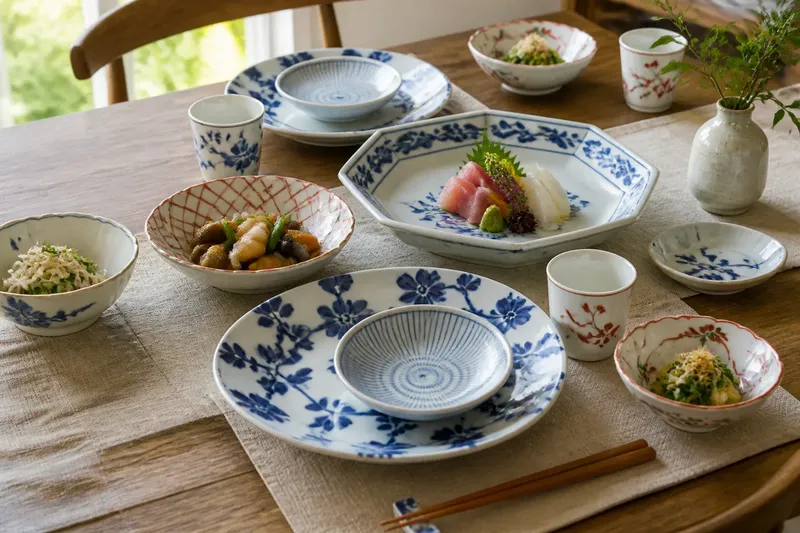
Set the vessel among the pieces that will actually accompany it. Include chopsticks, a rice bowl, any serving utensil and the space a hand needs to reach in. A shape that seems compact on an empty tabletop can become awkward once the meal is laid out.
Also consider where the dish will be placed during serving. A large, shallow platter may sit comfortably at the centre but leave little room for diners to move it. A contained bowl can be easier to pass, provided its sides give a secure hold and it is not too full to carry steadily.
How do you decide between two similar vessels?
Compare them with the food and serving utensil in mind. Set the pair side by side and ask which one gives the food enough room without wasting the table area. Check whether a spoon can reach the bottom, whether pieces remain visible, and whether the rim leaves space for diners to take a portion without disturbing the arrangement.
Then think about the vessel’s likely second use. A bowl chosen for noodles may also serve vegetables with liquid; a shallow dish selected for sliced fruit may work for pickles or small side dishes. Versatility matters, but it should not overrule a poor fit for the meal you have most often.
Which shape works for particular foods?
Is a bowl better for soup or saucy food?
Usually, yes: enclosing sides help keep liquid and ingredients together, and a curved interior can make spooning easier. For a shared dish, choose an opening broad enough for the serving utensil and for diners to reach the food.
Is a shallow dish better for fried food?
It can be, because pieces remain visible and are easier to pick up rather than being buried in a pile. If the food releases oil or comes with a dipping sauce, allow for that liquid rather than choosing a dish that is almost flat.
Can a shallow dish serve noodles?
Only if the noodles are presented as a small, relatively dry portion and can be lifted without sliding off the edge. Brothy noodles or a loose tangle are generally more manageable in a bowl with enough depth to contain them.
Does a deep bowl always save table space?
No. A deep bowl may have a wide rim or flared sides that take up as much room as a dish. Compare its widest point and how it sits among neighbouring tableware, rather than judging by height alone.
What is not worth fussing over?
Do not chase a perfect pairing between every course and a separate vessel. That adds table clutter without necessarily improving the meal. One or two well-chosen shapes can cover many uses, provided they suit the foods you serve and leave diners room to reach.
Arita porcelain bowl or dish is most useful as a choice about handling, not a test of formal table manners. If the food stays contained, the serving utensil works naturally and the vessel fits the table, its shape is doing its job. Keep that practical fit in mind when choosing the next piece, even if it sits outside a matching group.